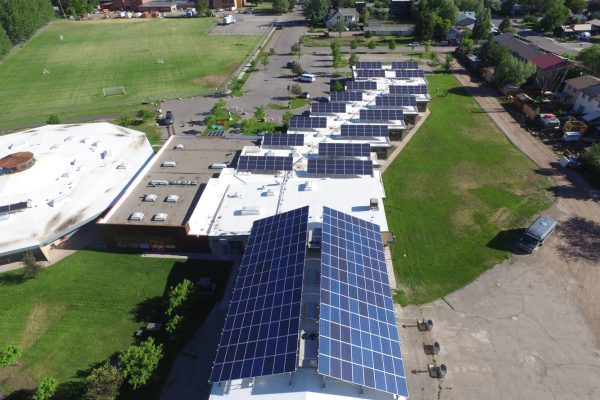
Fluid circulating through the system draws heat from the ground in the cold months and sends waste heat down into it in hot weather. The heat pumps function like reversible air conditioners, concentrating heat and moving it either into or out of the buildings. The entire system is powered by electricity, thus eliminating natural gas and its emissions. Geothermal heat pump systems like this are five to eight times more efficient than direct electric heating.
A similar system, designed by the GreyEdge Group, operates on the campus of Colorado Mesa University in Grand Junction. Fox-Rubin said, “Carbondale’s project is a big deal for the region, because it will be the first multi-building geo-exchange system designed for a small rural community.”
The work funded by the DOE design grant will take place over the next year. After the design phase, the DOE will open up a competitive second phase that could provide additional funding to build the system.
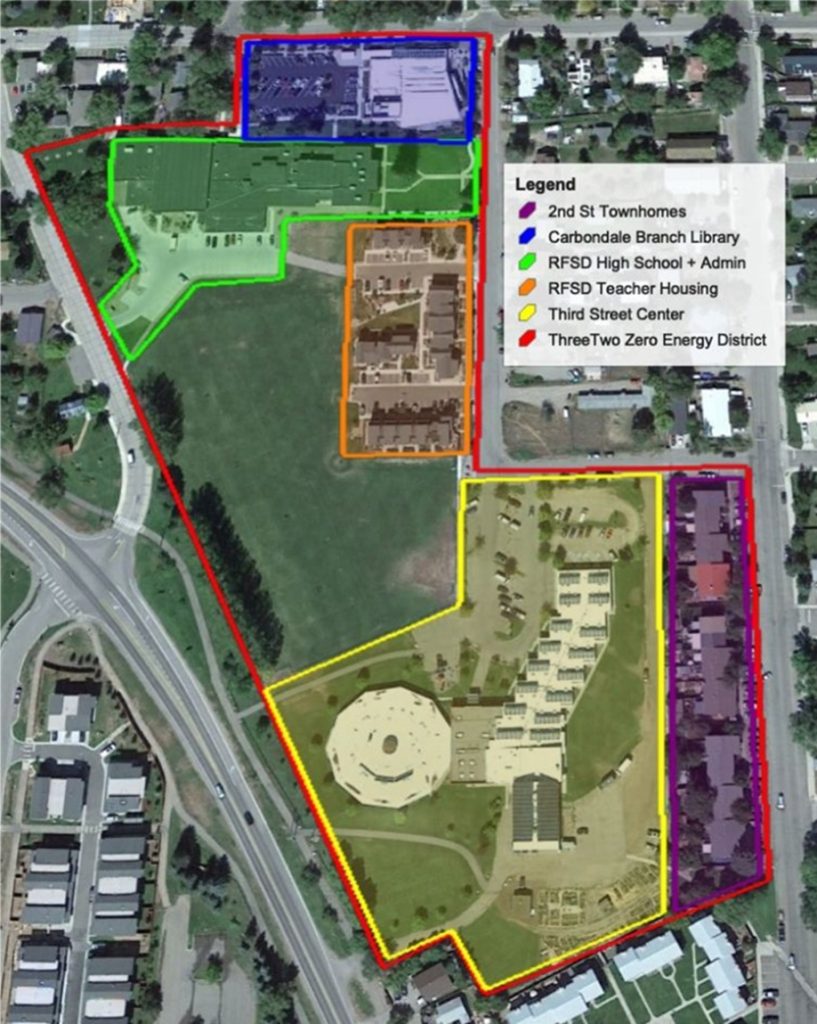
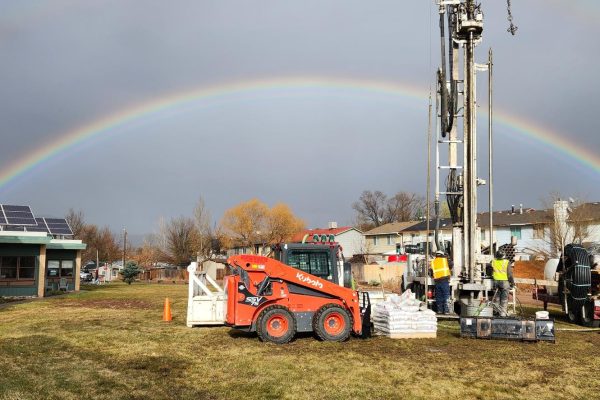
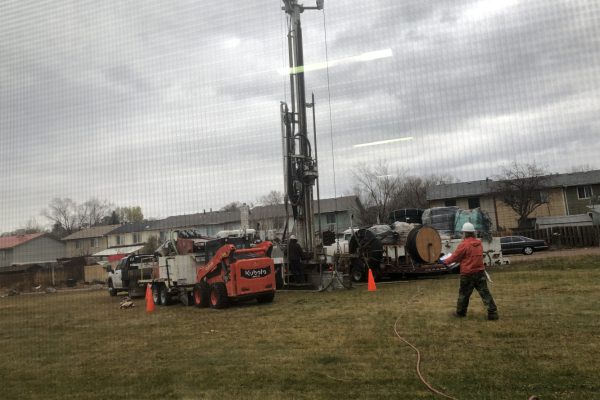
Work will start with the drilling of one or two test wells on town property adjacent to the Third Street Center. A drilling company has been contracted, and Fox-Rubin said it will start in early November. The drilling and thermal conductivity testing should be completed in about a week.
The operation will be much like drilling a water well, although Fox-Rubin stressed that no water will be taken out of the ground. The purpose of the test well is to enable the team to measure the thermal properties of the ground under the site.
Over the course of the next year, the design team will analyze the site’s geothermal potential, model and design the geothermal system, design heating-system retrofits for some of the buildings, and develop a budget and a funding proposal to DOE to actually build the system.
Fox-Rubin said that the majority of the DOE funding will go to the team of engineering, geothermal and building experts, as well as the test site drilling.
Fox-Rubin said that the Carbondale system will be designed to initially supply about a half of the district’s heating and cooling needs, with the ability to scale up to 100 percent over time. The team’s goal is to demonstrate that a geothermal district heating system can be economically feasible even with older existing buildings, he explained, and one of the keys to that will be to retrofit the buildings’ heating systems based on lifecycle economics and payback considerations. Thus, it may take five or more years to complete the transition for the entire neighborhood.